Your Design is Ready. Now What? Our Takeaways from The Fashion Tech Show New York 2026
Two days in New York. Dozens of conversations. A show full of people who are genuinely trying to figure out where fashion and retail technology is heading — not just what it can do, but what it actually takes to make it work inside real organizations.
We left with more to think about than we arrived with. Here is what stayed with us.
Your design is ready. Now what?
Anne A Wong, Chief Revenue Officer at Trasix, opened her Day 1 workshop with a question that sounds simple but lands differently when you sit with it.
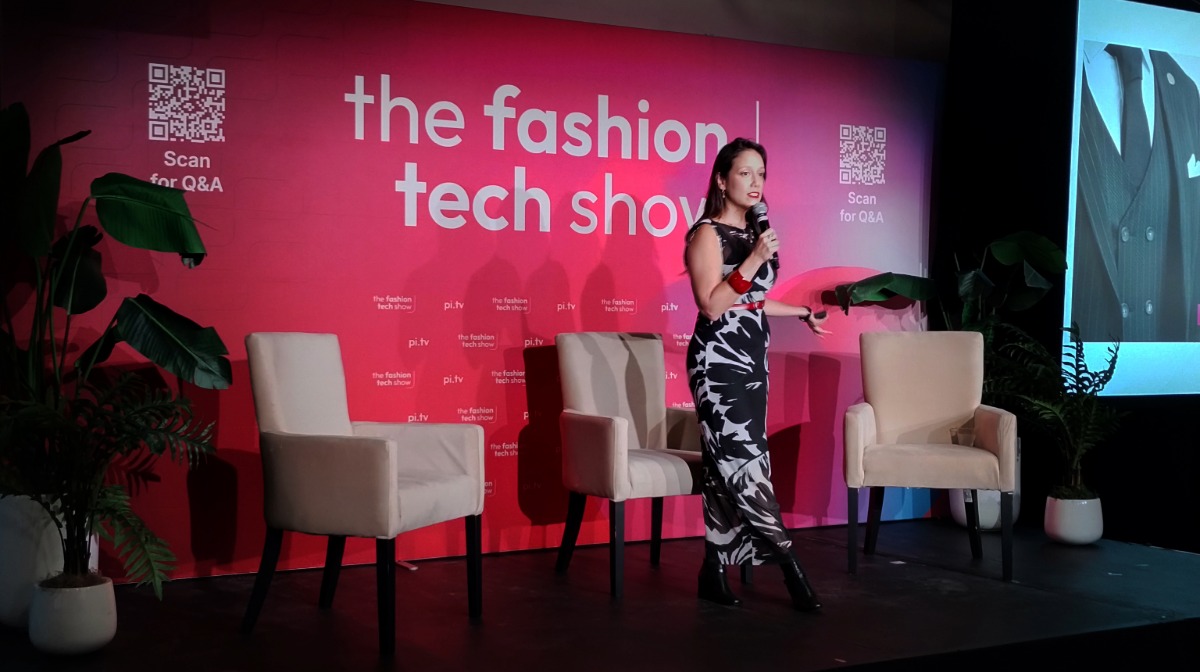
The creative process in fashion is extraordinary. A design goes through concept, sketch review, sampling, and line review before it ever gets approved. There are references pulled, materials selected, rounds of feedback between designers, merchants, leadership, planning, sales, and marketing. By the time a line direction is confirmed, an enormous amount of organizational energy has gone into it.
And then it stops.
Not because teams do not care what happens next. But because there is no connected path forward. The design exists. The intent behind it exists. But the systems that should carry it from creative approval into a structured assortment, a sell-in ready catalog, and eventually into market are not talking to each other. The product data gets re-entered manually. The context behind the decisions gets lost in the handoff. Teams that were not in the room have to catch up through email chains and exported spreadsheets.
Anne put it plainly in the session: the design goes into a black hole.
The numbers behind that are not small. 40% of styles never reach market. 20% of full-price sell-through is lost per month when execution lags behind creative intent. Those are not technology failures. They are workflow failures. And they happen because the moment design ends and execution begins, most organizations are operating across disconnected tools with no shared source of truth.
What the Fix Actually Looks Like
What if the creative process was not a handoff but a continuous loop? What if the design, the assortment, the campaign, the sell-in, and the order all lived in the same connected environment — so that what was decided in the design room was visible to merchandising, planning, sales, and marketing without anyone having to rebuild it?
That is the problem Trasix is built to solve. Not only for design teams, but for every team that touches the product after the design is done. Merchants who need to see how it fits into the assortment. Line managers who need to structure it across regions. Sales teams who need to present it to buyers. Marketing teams who need to know what the key items are and when they launch.
Tracy AI adds another layer to that. Instead of searching through seasons manually, teams can ask directly: has this design been created before? Which items were not carried over this season? Show me similar styles from previous seasons. The answers come from the live data, not from someone’s memory or a spreadsheet that may or may not be current.
The results from teams running this way speak for themselves: 20x faster product creation, and planning teams seeing the assortment take shape 30 days earlier in the buyer forecast cycle.
Creative excellence deserves commercial success. The gap between the two is not inevitable — it is a workflow problem, and it has a solution.
Day 1: Keep It Simple, Use the Right Tool
Ram Kummamuru, Head of DPC at H&M, opened the show with something that set the tone for everything that followed.
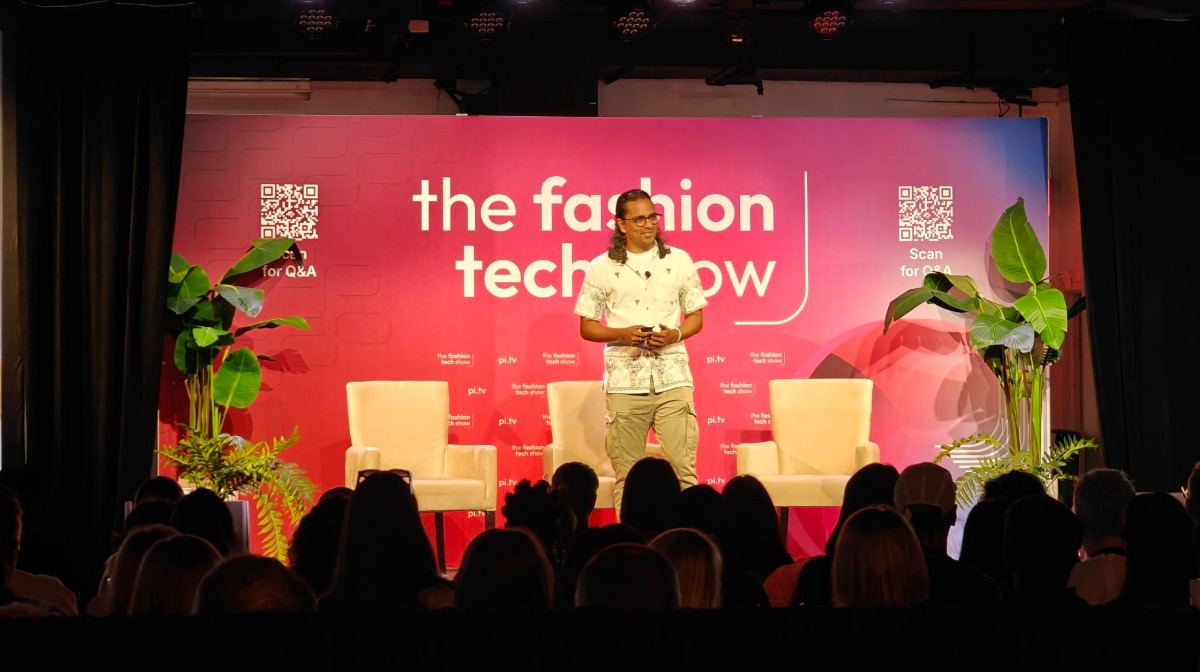
H&M’s shift over the past few years has not been about chasing one technology or going all in on one direction. It has been about moving from reactive assortment building to leading with creative intent — and doing it with flexibility. The right tool for the right category. AI where it genuinely helps with things like mobility flow and generating more design ideas. 3D where it makes sense, particularly for print, pattern, and graphics. Not everywhere, not by default.
The lesson that came through most clearly: process-driven training, not tool-focused training. Keep it simple. Cut sampling needs where you can. And do not let the technology become the point.
That is a harder discipline than it sounds in an industry where every vendor is telling you their tool will transform everything.
Day 2: Leadership Is the Missing Variable
Meg Ball, Sr. Director of AI Innovation and Creative Leader for Centric Brands opened Day 2 with a framework that we think will stay relevant long after the conference buzz fades.
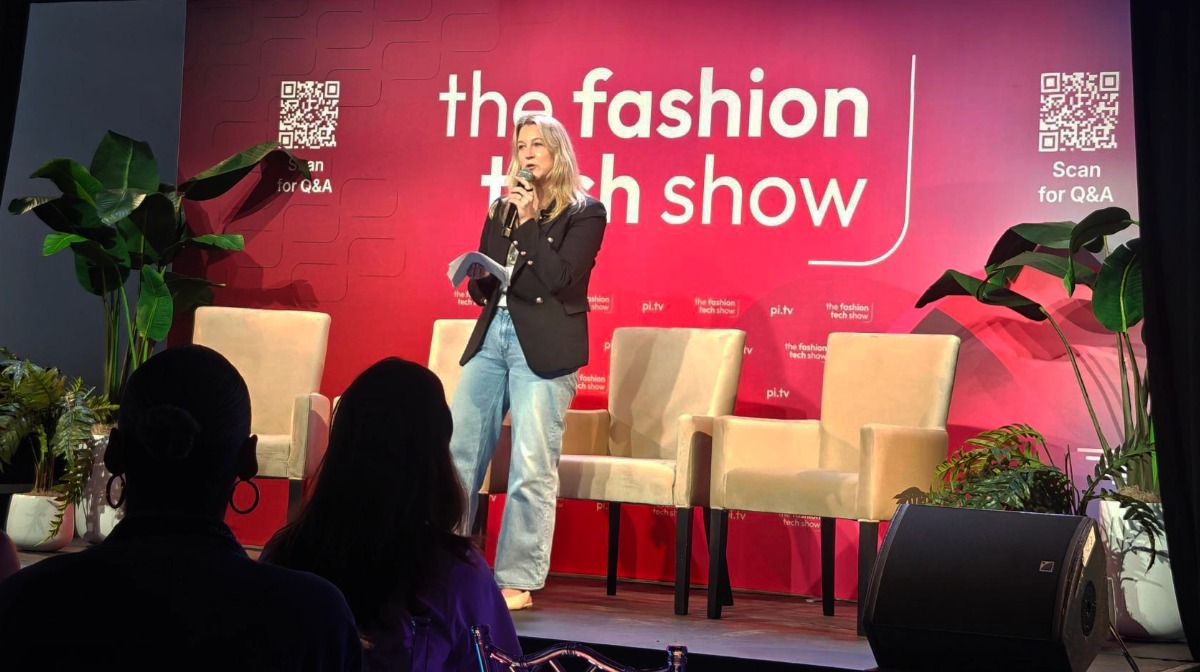
She introduced T.E.A.R. — Test, Evaluate, Adopt, Rollout — as a four-stage approach to AI adoption. The thing that makes it worth paying attention to is what it is not. Not one of the four stages is “become an AI expert.” Every single one is a leadership behavior.
- Test: give yourself permission to be bad at this. You are not buying software. You are buying permission. Go first. Share the flop.
- Evaluate: be a loving skeptic. Write the kill criteria before you fall in love with a tool. Fun without rigor is a toy; rigor without fun is a tool nobody opens.
- Adopt: from the demo to the desk. The demo is a runway show. The desk is a normal Tuesday. Real habits form from wins people actually feel — “I got my Friday back” matters more than any feature announcement.
- Rollout: scale the culture, not the seats. If the workflow still needs you in the room to function, you are not a leader. You are a bottleneck with good vibes. Be the architect, not the hero.
What Meg named is something most organizations are still getting wrong. They invest in the tool and skip the cultural infrastructure that makes the tool actually land. The result is adoption that looks good in a presentation and disappears six months later.
A Note on PLM
The second Day 2 session gave us a closer look at where PLM software may be heading.
There are interesting elements: clean mobile-first design, built-in APIs and webhooks, AI-powered search. These are the kinds of foundational capabilities the industry needs.
But a few things gave us pause.
The “single source of truth” positioning was presented as a differentiator when it is really a baseline requirement for any functioning PLM. The vendor exposure before internal design teams have formally signed off on assets felt like a workflow flaw that was being presented as a feature. And the narrative around design being the bottleneck in development timelines felt like it was addressing a symptom rather than the operational root cause.
The broader point the session reinforced: the industry still has work to do on what data governance actually means in practice, who gets access to what and when, and how the information flows between systems without creating risk or confusion downstream.
The Main Takeaway
Two days in New York confirmed something we already believed and gave us new language to talk about it.
Last year, the main question was whether AI would replace 3D and DPC. This year, the focus was on learning lessons and best practices around AI Adoption.
The recurring conclusion in 2026 is that the tech is not the problem. The conditions around the technology — the workflows, the cultural permission to experiment, the data governance, the leadership behaviors — are where most implementations succeed or fail.
The conversation has moved. Process and change management are more important than ever — but so is experimentation and permission to play. It is about what it actually takes to make them work. That is the harder, more honest, more useful question. And it is the one this industry is starting to ask out loud.
We are excited to have been there for it.
If you want to see how Trasix approaches the problem of connecting creative excellence to commercial execution, we would love to show you: request a demo.